

Article Sidebar
Main Article Content
Abstract
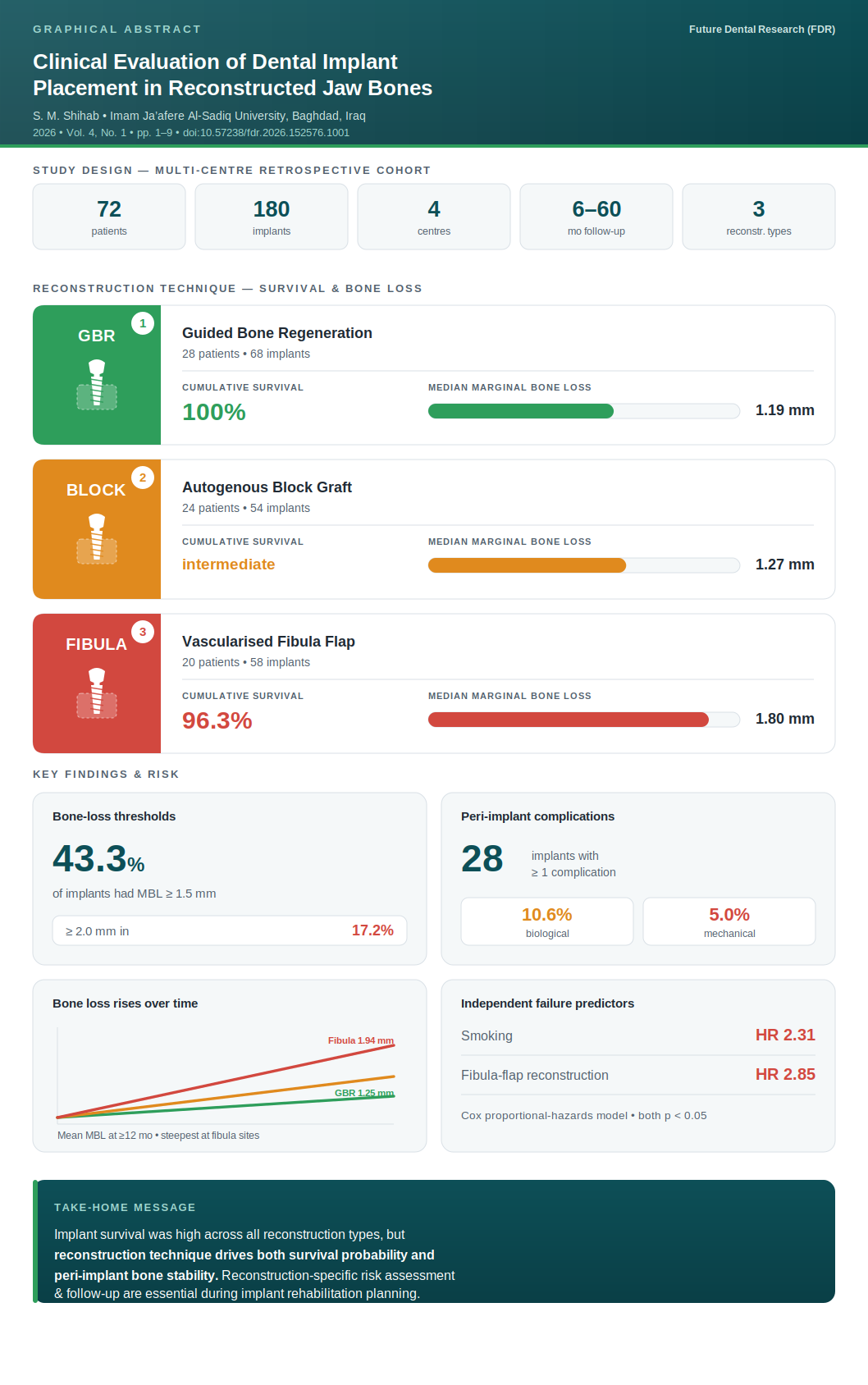
The purpose of the proposed multi-centre retrospective cohort study was to conduct a clinical and radiographic evaluation on dental implants outcomes in restored jaw bone. There were 72 patients who had undergone 180 implants and the follow up period was between 6 and 60 months. Imputed analysis was done to compare the survival, marginal bone loss (MBL), and outcome patterns with the reconstruction technique on an implant level. Surgery survival rates were high, as indicated by Kaplan Meyer review; nevertheless, there was a variation in survival rate of implants used in different types of reconstruction. Guided bone regeneration (GBR) sites with implants registered a cumulative survival of 100% then the autografts block reconstructions of the vascularized fibula flap (96.3%), with less portability of the block grafts vascularized fibula flapses after either tissue state recorded. Reconstruction techniques had different marginal bone losses. The median MBL of GBR, autogenous block grants and vascularized fibula flap were 1.19 mm, 1.27 mm and 1.80 mm respectively. Forty-three-point three percent of the implants had MBL value of only 1.5 mm and above and 17.2 percent had bigger values of 2.0 mm. Favourable correlation also indicated a positive association between the length of follow up and MBL with the site of vascularized fibula flaps portraying the highest rate of bone loss over time. In general, although the survival of implants in reconstructed jaw bones was usually positive, reconstruction technique and peri-implant bone stability were also affected by the time after which the implant was placed. Such results suggest that reconstruction-focused outcome measurement is essential during the implant rehabilitation planning process.
Keywords
Article Details
Copyright (c) 2026 Saif Mohamed Shihab (Author)

This work is licensed under a Creative Commons Attribution 4.0 International License.
How to Cite
References
- Panchal H, Shamsunder MG, Petrovic I, Rosen EB, Allen Jr RJ, Hernandez M, et al. Dental implant survival in vascularized bone flaps: a systematic review and meta-analysis. Plast Reconstr Surg. 2020;146(3):637-48. doi: 10.1097/PRS.0000000000007077.
- Ewers R, Perisanidis C, Politis C, Meeus J, Lauer G, Korn P, et al. Multicenter 14-year follow-up of fibula vascular grafts of mandibles and maxillae restored with short and extra-short implants. J Cranio-Maxillofac Surg. 2025;53(8):1113-22. doi: 10.016/j.jcms.2025.04.001.
- Wüster J, Mahlow L, Neckel N, Rendenbach C, Heiland M, Vach K, et al. Long term dental implant survival and bone level changes with special emphasis on radiation therapy after free fibula flap reconstruction–a retrospective study. Clin Oral Invest. 2025;29:559. doi: 10.1007/s00784-025-6587-9.
- Liu Y-b, Wu D, Wang J-y, Lun X-h, Dai W. Meta-analysis of the survival rate and postoperative infection rate of primary and secondary implants after vascularized fibula transplantation for reconstruction of jaw defects. Int J Implant Dent. 2023;9:51. doi: 10.1186/s40729-023-00514-x.
- Zhang X, Xiao T, Yang L, Ning C, Guan S, Li X. Application of a vascularized bone free flap and survival rate of dental implants after transplantation: A systematic review and meta-analysis. J Stomatol Oral Maxillofac Surg. 2023;124(3):101401. doi: 10.1016/j.jormas.2023.
- Galindo‐Moreno P, Catena A, Pérez‐Sayáns M, Fernández‐Barbero JE, O'Valle F, Padial‐Molina M. Early marginal bone loss around dental implants to define success in implant dentistry: A retrospective study. Clin Implant Dent Relat Res. 2022;24(5):630-42. doi: 10.1111/cid.13122.
- Memenga-Nicksch S, Marschner F, Thomas NH, Holzwart D, Staufenbiel I. Systematic review and meta-analysis on marginal bone loss of dental implants placed in augmented or pristine bone sites: Findings from clinical long-term studies. J Dent. 2025;158:105808. doi: 10.1016/j.jdent.2025.
- Schwarz F, Alcoforado G, Guerrero A, Jönsson D, Klinge B, Lang N, et al. Peri‐implantitis: Summary and consensus statements of group 3. The 6th EAO Consensus Conference 2021. Clin Oral Implants Res. 2021;32:245-53. doi: 10.1111/clr.13827.
- Lin S, Tao S, Chou W-C, Zhang G-Q, Li X. VisualSphere: a Web-based Interactive Visualization System for Clinical Research Data. AMIA Jt Summits Transl Sci Proc. 2024;2024:603-12.
- Narde J, Ganapathy D, Pandurangan KK. Evaluation of the Success of Autogenous Block Grafting in Atrophic Maxillary and Mandibular Ridges Prior to and After Implant Placement. Cureus. 2024;16(2):e53829. doi: 10.7759/cureus.5382.
- Herrera González D, Berglundh T, Schwarz F, Chapple I, Jepsen S, Sculean A, et al. Prevention and treatment of peri-implant diseases—The EFP S3 level clinical practice guideline. J Clin Periodontol. 2023;50(Suppl. 26):4–76. doi: 10.1111/jcpe.13823.
- Giok KC, Veettil SK, Menon RK. Risk factors for Peri-implantitis: An umbrella review of meta-analyses of observational studies and assessment of biases. J Dent. 2024;146:105065. doi: 10.1016/j.jdent.2024.
- Dos Reis INR, Vilela N, Naenni N, Jung RE, Schwarz F, Romito GA, et al. Methods for assessing peri-implant marginal bone levels on digital periapical radiographs: meta-research. Dentomaxillofac Radiol. 2025;54(3):222-30. doi: 10.1093/dmfr/twaf002.
- Sahrmann P, Kühl S, Dagassan‐Berndt D, Bornstein MM, Zitzmann NU. Radiographic assessment of the peri‐implant site. Periodontol 2000. 2024;95(1):70-86. doi: 10.1111/prd.12577.
- Cucchi A, Maiani F, Franceschi D, Sassano M, Fiorino A, Urban IA, et al. The influence of vertical ridge augmentation techniques on peri‐implant bone loss: A systematic review and meta‐analysis. Clin Implant Dent Relat Res. 2024;26(1):15-65. doi: 10.1111/cid.13282.
- Nham T-T, Koudougou C, Piot B, Corre P, Bertin H, Longis J. Prosthetic rehabilitation in patients with jaw reconstruction by fibula free flap: A systematic review. J Stomatol Oral Maxillofac Surg. 2024;125(3):101735. doi: 10.1016/j.jormas.2023.
- Khayat S, Sada Urmeneta Á, González Moure B, Fernández Acosta D, Benito Anguita M, López López A, et al. Reconstruction of segmental mandibular defects with double-barrel fibula flap and osseo-integrated implants: a systematic review. J Clin Med. 2024;13(12):3547. doi: 10.390/jcm13123547.
- Kim H, Roh T, Banegas DW, Cha I-h, Kim HJ, Nam W, et al. Is immediate dental implant in fibula free flap beneficial for implant survival and osteoradionecrosis in jaw reconstruction? Oral Oncol. 2024;156:106945. doi: 10.1016/j.oraloncology.2024.
- Kaiser M, Burg S, Speth U, Cotter M-L, Smeets R, Gosau M, et al. Outcomes and influencing factors of dental implants in fibula, iliac crest, and scapula free flaps: a retrospective case–control study. Int J Implant Dent. 2024;10:8. doi: 10.1186/s40729-024-00522-5.
- Moraschini V, Louro RS, Son A, Calasans‐Maia MD, Sartoretto SC, Shibli JA. Long‐term survival and success rate of dental implants placed in reconstructed areas with extraoral autogenous bone grafts: a systematic review and meta‐analysis. Clin Implant Dent Relat Res. 2024;26(3):469-81. doi: 10.1111/cid.13319.
References
Panchal H, Shamsunder MG, Petrovic I, Rosen EB, Allen Jr RJ, Hernandez M, et al. Dental implant survival in vascularized bone flaps: a systematic review and meta-analysis. Plast Reconstr Surg. 2020;146(3):637-48. doi: 10.1097/PRS.0000000000007077.
Ewers R, Perisanidis C, Politis C, Meeus J, Lauer G, Korn P, et al. Multicenter 14-year follow-up of fibula vascular grafts of mandibles and maxillae restored with short and extra-short implants. J Cranio-Maxillofac Surg. 2025;53(8):1113-22. doi: 10.016/j.jcms.2025.04.001.
Wüster J, Mahlow L, Neckel N, Rendenbach C, Heiland M, Vach K, et al. Long term dental implant survival and bone level changes with special emphasis on radiation therapy after free fibula flap reconstruction–a retrospective study. Clin Oral Invest. 2025;29:559. doi: 10.1007/s00784-025-6587-9.
Liu Y-b, Wu D, Wang J-y, Lun X-h, Dai W. Meta-analysis of the survival rate and postoperative infection rate of primary and secondary implants after vascularized fibula transplantation for reconstruction of jaw defects. Int J Implant Dent. 2023;9:51. doi: 10.1186/s40729-023-00514-x.
Zhang X, Xiao T, Yang L, Ning C, Guan S, Li X. Application of a vascularized bone free flap and survival rate of dental implants after transplantation: A systematic review and meta-analysis. J Stomatol Oral Maxillofac Surg. 2023;124(3):101401. doi: 10.1016/j.jormas.2023.
Galindo‐Moreno P, Catena A, Pérez‐Sayáns M, Fernández‐Barbero JE, O'Valle F, Padial‐Molina M. Early marginal bone loss around dental implants to define success in implant dentistry: A retrospective study. Clin Implant Dent Relat Res. 2022;24(5):630-42. doi: 10.1111/cid.13122.
Memenga-Nicksch S, Marschner F, Thomas NH, Holzwart D, Staufenbiel I. Systematic review and meta-analysis on marginal bone loss of dental implants placed in augmented or pristine bone sites: Findings from clinical long-term studies. J Dent. 2025;158:105808. doi: 10.1016/j.jdent.2025.
Schwarz F, Alcoforado G, Guerrero A, Jönsson D, Klinge B, Lang N, et al. Peri‐implantitis: Summary and consensus statements of group 3. The 6th EAO Consensus Conference 2021. Clin Oral Implants Res. 2021;32:245-53. doi: 10.1111/clr.13827.
Lin S, Tao S, Chou W-C, Zhang G-Q, Li X. VisualSphere: a Web-based Interactive Visualization System for Clinical Research Data. AMIA Jt Summits Transl Sci Proc. 2024;2024:603-12.
Narde J, Ganapathy D, Pandurangan KK. Evaluation of the Success of Autogenous Block Grafting in Atrophic Maxillary and Mandibular Ridges Prior to and After Implant Placement. Cureus. 2024;16(2):e53829. doi: 10.7759/cureus.5382.
Herrera González D, Berglundh T, Schwarz F, Chapple I, Jepsen S, Sculean A, et al. Prevention and treatment of peri-implant diseases—The EFP S3 level clinical practice guideline. J Clin Periodontol. 2023;50(Suppl. 26):4–76. doi: 10.1111/jcpe.13823.
Giok KC, Veettil SK, Menon RK. Risk factors for Peri-implantitis: An umbrella review of meta-analyses of observational studies and assessment of biases. J Dent. 2024;146:105065. doi: 10.1016/j.jdent.2024.
Dos Reis INR, Vilela N, Naenni N, Jung RE, Schwarz F, Romito GA, et al. Methods for assessing peri-implant marginal bone levels on digital periapical radiographs: meta-research. Dentomaxillofac Radiol. 2025;54(3):222-30. doi: 10.1093/dmfr/twaf002.
Sahrmann P, Kühl S, Dagassan‐Berndt D, Bornstein MM, Zitzmann NU. Radiographic assessment of the peri‐implant site. Periodontol 2000. 2024;95(1):70-86. doi: 10.1111/prd.12577.
Cucchi A, Maiani F, Franceschi D, Sassano M, Fiorino A, Urban IA, et al. The influence of vertical ridge augmentation techniques on peri‐implant bone loss: A systematic review and meta‐analysis. Clin Implant Dent Relat Res. 2024;26(1):15-65. doi: 10.1111/cid.13282.
Nham T-T, Koudougou C, Piot B, Corre P, Bertin H, Longis J. Prosthetic rehabilitation in patients with jaw reconstruction by fibula free flap: A systematic review. J Stomatol Oral Maxillofac Surg. 2024;125(3):101735. doi: 10.1016/j.jormas.2023.
Khayat S, Sada Urmeneta Á, González Moure B, Fernández Acosta D, Benito Anguita M, López López A, et al. Reconstruction of segmental mandibular defects with double-barrel fibula flap and osseo-integrated implants: a systematic review. J Clin Med. 2024;13(12):3547. doi: 10.390/jcm13123547.
Kim H, Roh T, Banegas DW, Cha I-h, Kim HJ, Nam W, et al. Is immediate dental implant in fibula free flap beneficial for implant survival and osteoradionecrosis in jaw reconstruction? Oral Oncol. 2024;156:106945. doi: 10.1016/j.oraloncology.2024.
Kaiser M, Burg S, Speth U, Cotter M-L, Smeets R, Gosau M, et al. Outcomes and influencing factors of dental implants in fibula, iliac crest, and scapula free flaps: a retrospective case–control study. Int J Implant Dent. 2024;10:8. doi: 10.1186/s40729-024-00522-5.
Moraschini V, Louro RS, Son A, Calasans‐Maia MD, Sartoretto SC, Shibli JA. Long‐term survival and success rate of dental implants placed in reconstructed areas with extraoral autogenous bone grafts: a systematic review and meta‐analysis. Clin Implant Dent Relat Res. 2024;26(3):469-81. doi: 10.1111/cid.13319.